




Pruning in Fifield, WI
Trees tend to give warning before a limb fails, but the signs are easy to miss from the ground. Crossing branches, dead wood, heavy limbs over a roof, and crowded canopies all add strain to a tree, and neglected growth can eventually reach structures or vehicles. Pruning removes the right wood at the right point so the tree keeps its shape, its strength, and its health. The challenge is knowing which cuts help, because removing too much or cutting in the wrong place can weaken a tree, which is why structured pruning matters. Done well, pruning also keeps light and air moving through the canopy, so the tree stays vigorous and safer around the buildings, vehicles, and paths nearby.
Woodland surrounds Fifield, a town founded in 1876 along the Wisconsin Central Railroad in the big northern forest, so trees are part of life on many properties. Owners manage limbs near roofs, driveways, and lines of sight, which makes thoughtful pruning a routine part of caring for a lot and keeps healthy trees where they belong in the landscape. A pruned tree that is cared for on a regular basis is easier to live beside than one left to grow in every direction at once.
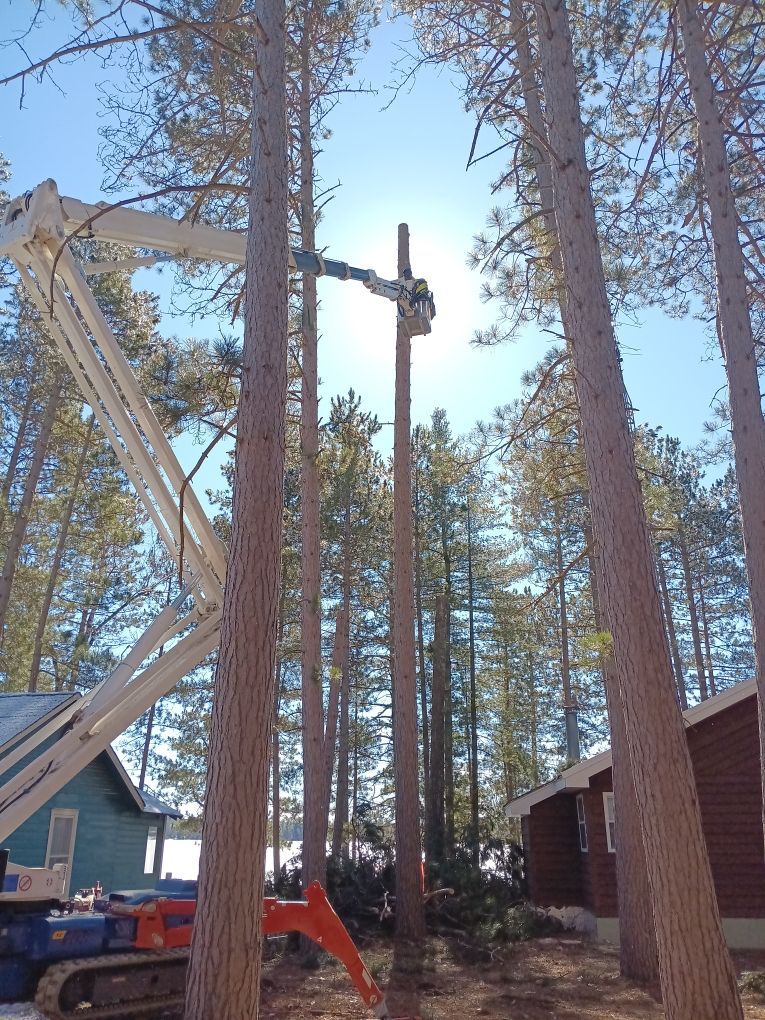
We are Michlig Tree Service, and we've provided expert pruning in Fifield, WI, from structural and corrective cuts to clearance around roofs and driveways. Our work follows ANSI A300 pruning practices, and we get better every year. Each tree is considered on its own: we look at its structure, its surroundings, and what the property needs before making the first cut, because good pruning always begins with understanding the tree in front of us.
About Fifield, WI
Fifield is a town in Price County, Wisconsin, covering about 156 square miles at an elevation of roughly 1,558 feet. The community counted 905 residents in the 2020 census and is named for Sam Fifield. Within the town sit the unincorporated community of Fifield and the former settlement of Coolidge, a ghost town today.
Founded in 1876 along the Wisconsin Central Railroad, the area grew up in the big northern forest, and a fire in 1893 shaped its early history. Today the Price County Historical Society Museum, housed in the old town hall, preserves that history for visitors and neighbors, with displays that tell the story of the families, the railroad, and the timber that shaped the area.
The south fork of the Flambeau River flows nearby, and lakes, trails, and woodland draw anglers, hunters, snowmobilers, and campers. Long, snowy winters give way to mild, green summers, and life here follows the seasons closely, with each one bringing its own routines for work and recreation.
Heavy Snow and Tree Pruning
Northern Wisconsin winters bring long stretches of snow, and wet snow can rest on branches and add significant weight. Limbs that are crowded, crossing, or weakly attached are the first to show strain, while well spaced branches with strong attachment shed that load more easily. A tree that is pruned with these traits in mind tends to handle a hard winter with fewer broken limbs and less cleanup afterward.
Structural pruning is the practical answer. Reducing overextended limbs, removing dead or damaged wood, and keeping a clear central leader on suitable trees help a tree carry winter loads and recover from them. Pruning done before the snow season gives trees a head start.
Location matters as much as structure. Branches that overhang roofs, driveways, and walkways deserve particular attention in any property plan because snow and ice can drop from them onto places people use. Clearance pruning keeps those areas open and makes winter access safer, and it keeps gutters clear.
Our Services in Fifield, WI
How Proper Cuts Help a Tree
Proper pruning is selective. Removing dead, damaged, or crossing branches while leaving the tree's natural shape in place helps it heal and grow stronger. Cutting with a purpose, rather than simply cutting back, is what separates pruning from topping or heavy trimming. Structural, developmental, and corrective pruning each serve a purpose, from guiding young trees to repairing older ones.
Where and how a cut is made matters. Clean cuts just outside the branch collar let a tree seal the wound naturally, while flush cuts and stubs invite decay. Taking off too much canopy at once can stress a tree, so a measured approach protects its health and appearance.
Pruning also serves goals beyond health. Canopy thinning lets sunlight reach the lawn and opens views, clearance pruning creates safe access corridors, and lake view screens can be shaped so the tree remains a feature of the property rather than an obstacle. Planning these goals together before work starts avoids repeat visits and leaves the property looking balanced and intentional.
Happy Customers in Fifield, WI
Why Fifield Residents Trust Michlig Tree Service
Safety and craft guide Michlig Tree Service, and we've provided experienced pruning in Fifield, WI with careful attention to each tree's structure and the property around it.
Equipped for everything from planting shrubs to removing huge trees on remote islands, we bring the same standards to pruning. Structural, developmental, and corrective cuts follow ANSI A300 practices, and cabling and bracing give support to trees that need extra help. That range of skills means a pruning plan can account for the whole tree, from its roots and soil to its canopy and its neighbors.
Improvement is part of how we work, because we get better every year. We listen to what you want from your trees, explain the options in plain language, and leave the site tidy and safe when the work is finished. Brush and debris are cleared away, and the finished trees are left looking natural rather than butchered, which is the standard we hold ourselves to.
Hire Us! Dependable Pruning in Fifield, WI
Crowded canopies, dead wood, and overhanging limbs can all be shaped with care, and Michlig Tree Service is the crew to call: we've provided dependable pruning in Fifield, WI for properties of every size, from small residential lots to large wooded acreage. Our crew arrives equipped to handle the job safely.
Getting started takes a short conversation. Describe the trees and what you would like done using the phone or the contact page, and we will arrange a visit to look at the property, talk through the options, and plan the work. We explain the cuts we recommend and the reasons behind them.
Our crew handles crown pruning, trimming around roofs and driveways, cabling and saving trees, and recurring monthly or yearly service, along with storm response and repair, so one team can look after your trees through every season. Because we get better every year, our approach keeps improving, and the result is steady, careful care that keeps trees healthy and properties safe.
Frequently Asked Questions
1. How do I know if my tree needs pruning?
Look for dead or broken branches, limbs rubbing together, growth touching a roof or wire, and a crowded canopy. If you are unsure, we can walk the property with you and explain what we see and what each tree is likely to need.
2. What is the difference between structural, developmental, and corrective pruning?
Structural pruning builds strong branch structure, developmental pruning guides young trees as they grow, and corrective pruning repairs problems in established trees. We choose the approach that fits each tree's age, species, and condition, often combining more than one.
3. How much of a tree can be removed in one visit?
Only as much as the tree can handle comfortably. We remove targeted wood rather than large portions of the canopy, which protects the tree's health and keeps its natural shape intact afterward for years to come.
4. Can pruning improve my lake view without harming the trees?
Yes. Careful canopy thinning and screen shaping can open views while leaving the tree healthy and attractive. We discuss the look you want and shape each tree with its long term health in mind, never sacrificing the tree for a short term view.
5. Can you prune branches hanging over my roof or driveway?
Yes. Trimming around roofs and driveways is part of our regular work. We remove overhanging limbs carefully so snow, ice, and debris stay clear of the places you use every day, including entries, parking areas, and walkways.
6. What are cabling and bracing, and when are they used?
Cabling and bracing add structural support to a tree with weak unions or heavy limbs. It can reduce risk and help save a valuable tree that might otherwise be lost. We assess the tree first to see whether support makes sense.
7. Do you offer ongoing pruning for properties that need regular care?
Yes. We offer recurring monthly or yearly service so trees receive attention on a steady schedule. Regular visits keep growth in check and help catch small concerns before they become larger ones, and they spread the work over time.
8. How do I book a pruning visit with Michlig Tree Service?
Give us a call or leave a note on our contact page describing your trees and goals. A visit comes next, and we talk through the plan with you, including which trees we would address first.