




Trail Building in Fifield, WI
A worn footpath shows exactly how a piece of land gets used, and it rarely shows it well. Foot traffic follows the shortest line instead of the sound one, so the route squeezes between brush, catches on exposed roots, or passes beneath a leaning tree that nobody has looked at closely. Left alone, that line keeps snagging walkers in the same spots while the brush closes in a little more each year. Clearing alone does not settle any of it: the layout, the trees beside the route, the roots in the corridor, and the surface underfoot all need a plan, which is what custom trail creation in Fifield, WI, is built around.
Anyone weighing low-impact trail building in Fifield, WI, is working with a setting that was forest long before it was a town. The town was founded in 1876 in the big northern forest, which makes timber a natural starting point for any trail plan. Which trees stay, which come out of the corridor, and how the route threads between them decide how the finished trail looks and feels underfoot. Sorting those choices out before the first cut keeps the layout deliberate, and that is where the real work of trail building begins.
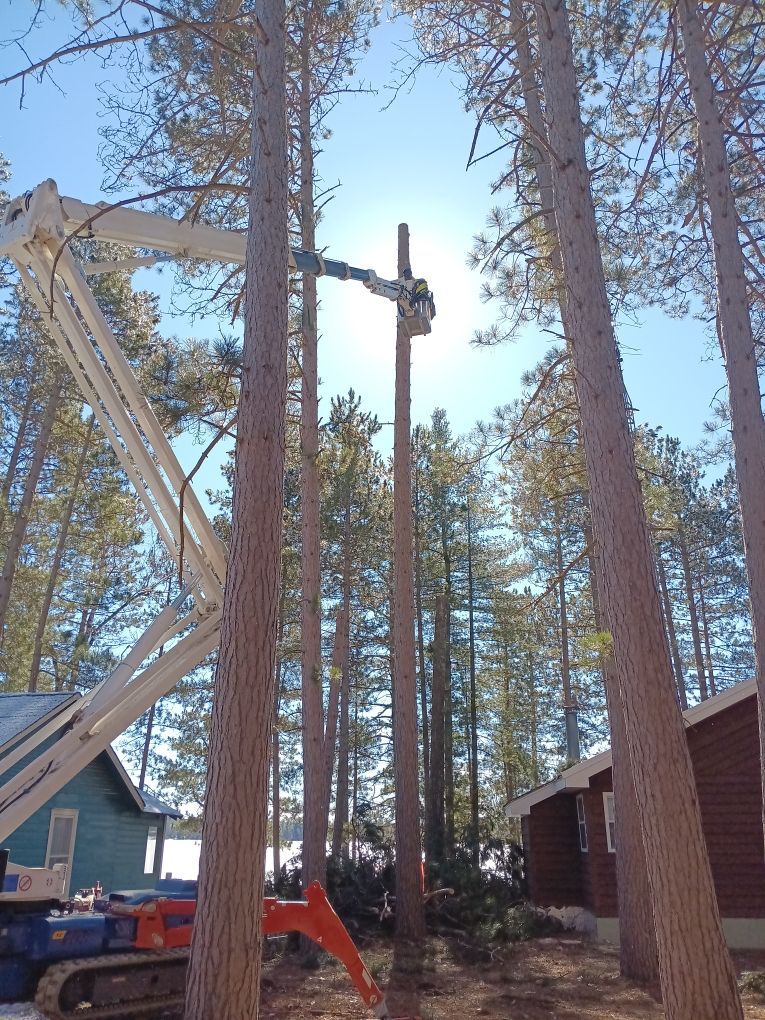
With over 15 years of tree work behind us at Michlig Tree Service, we've provided expert trail building in Fifield, WI, shaping each corridor around the way the land will actually be used. Compact equipment handles tight access, and ground protection mats go down when conditions require them, so rutting and soil disturbance stay down. Every project starts with a property visit, and a message to us is all it takes to begin the conversation about your land.
About Fifield, WI
Fifield is a town in Price County, Wisconsin, named for Sam Fifield, a politician and businessman who served as the state's 14th lieutenant governor. The settlement dates to 1876 and grew up where the Wisconsin Central Railroad crossed the south fork of the Flambeau River. Logging boomed in its early years, and the population grew with it.
Covering 149.4 square miles of land and 7.1 square miles of water, the town sits at an elevation of 1,558 feet. The unincorporated community of Fifield lies inside it, along with the ghost town of Coolidge, so the town's borders take in far more than a single center. Land makes up the great majority of that total, with water scattered through it.
Three historic sites mark the town's past: the Fifield Fire Lookout Tower, the Round Lake Logging Dam, and the old Fifield Town Hall, which now houses the Price County Historical Society Museum. Together they connect Fifield to the logging years that shaped it.
Where Woods Meet Water: Trail Building in Fifield, WI
Water is part of Fifield's makeup, from the river that gave the railroad its crossing to the shoreline a property owner might want to reach. A trail makes that shoreline an intentional destination, joining the house, the yard, and the water into one planned route in place of the scattered paths people wear down on their own.
Getting to the water means crossing whatever the ground offers on the way. Rainfall and soil moisture guide how the work is coordinated, and ground protection mats reduce rutting and soil disturbance wherever conditions call for them, so the corridor reaches the shore without scarring the land beside it.
Sightlines matter on a shoreline route too. Selective thinning lets sunlight reach the path and keeps views toward the water open, while edge trimming leaves a clean corridor that is comfortable to walk. The goal is a route that serves the shoreline without clearing more than the trail needs.
Our Services in Fifield, WI
Decisions to Make Before Trail Building in Fifield, WI Starts
Purpose comes first, because a trail meant for a strolling couple looks different from one meant for kids, bikes, or hunters. A wider path gives two people room to walk side by side, a defined play area with clear limits keeps children close, and dog walking, biking, snowshoeing, and cross-country skiing all depend on an open corridor. Hunting land adds another goal: a route that reaches a tree stand.
Surface is the next choice. Wood mulch works as a natural top layer for walking and biking trails, giving soft, stable footing, reduced weed growth, and a surface that reshapes easily. As it decomposes the mulch also improves the soil, and seasonal re-mulching keeps the trail in shape.
Trees along the route deserve a close look before any clearing begins. Hazard trees beside the path get mitigated, canopy lifting adds overhead clearance, and stumps and unwanted roots inside the corridor are ground out or removed. Standard root pruning near the path keeps neighboring trees healthy, so the woods beside the trail stay sound.
Happy Customers in Fifield, WI
Why Fifield Residents Trust Michlig Tree Service
Local ownership matters on a trail project, and as Michlig Tree Service we've provided experienced trail building in Fifield, WI, as a local, family-owned business with licensed, certified, and insured crews. Each corridor gets planned around the land and the people who will use it.
Chief Arborist Justin Kertz holds a Bachelor of Science in Forest Management and Urban Forestry, along with ISA Certified Arborist and Tree Risk Assessment Qualification credentials. He plays a central role in our planning and field support, and trees along a planned route are evaluated using ISA TRAQ methodology.
Details matter to us. We treat your property like our own, and a strong focus on the finished corridor shows in the clean edges, the open overhead clearance, and the surface underfoot. Owner Ben Michlig keeps the work centered on doing difficult jobs cleanly and safely. We create and maintain trails all the time, and each project is shaped to what your land calls for.
Hire Us! Professional Trail Building in Fifield, WI
Landowners ready for a trail that fits their land can hire Michlig Tree Service, where we've provided professional trail building in Fifield, WI, from the first layout to the finished surface. Seasonal trail upkeep in Fifield, WI, belongs to the same work, with re-mulching and maintenance keeping the path in shape afterward.
Send us a message describing the land, the route you picture, and how you plan to use the trail, and we will begin with a property visit. That visit gives us a chance to look at the corridor, the trees beside it, and the access for compact equipment before anything gets cut.
Every project carries over 15 years of experience, from a wider footpath for two to a border loop, a shoreline route, or a corridor out to a tree stand. Whatever the scope, woodland trail building in Fifield, WI, gets the same close attention to the trees beside the route. Start the conversation with us whenever you are ready.
Frequently Asked Questions
1. Can a trail connect my house to the shoreline?
Yes. Connecting different parts of a property, including a route down to the shoreline, is among the common objectives we plan trails around. We lay out the corridor, clear it, and surface it so the path from house to water feels deliberate.
2. Can a trail include a play area for kids?
Keeping kids close is a goal we plan around, so a trail can include a play area with set limits. We shape the layout with that purpose in mind and talk through the boundaries with you before anything is built.
3. What does selective thinning do along a trail?
Thinning selectively opens the canopy so sunlight reaches the path and sightlines stay clear, which keeps the corridor feeling open instead of closed in. We thin with the purpose of the trail in mind, never more than the layout calls for.
4. Can a trail stay discreet on my land?
That is up to you. We can get aggressive or stay under the radar, so the width of the corridor, the edge trimming, and the thinning all follow how visible you want the finished trail to be.
5. Does the weather affect trail work in Fifield?
Rainfall, soil moisture, and freeze/thaw cycles all guide how we coordinate trail work, because working with ground conditions reduces site impact. Ground protection mats limit rutting and soil disturbance whenever conditions require them, which keeps the corridor intact.
6. Can a trail be used for winter activities?
Yes, a trail can serve winter activities. Snowshoeing and cross-country skiing sit alongside dog walking and biking among the uses we plan trails around. Share how the trail will be used and we shape the corridor to match.
7. Who looks at the trees beside a planned route?
Chief Arborist Justin Kertz, an ISA Certified Arborist, plays a central role in planning and field support. Hazard trees along a route are assessed using ISA Tree Risk Assessment Qualification methodology, and mitigation becomes part of the trail work.
8. Do you clear brush and deadfall along the route?
Yes. Brushing, clearing, and deadfall removal open the corridor, and edge trimming gives the finished trail a clean line. Send us a message about your land and we will talk through what your route needs.